
Information Technology resume samples
Infrastructure and support jobs in India are judged on the systems you kept running and the certificates you hold. Recruiters search for CCNA or CCNP, RHCSA, Azure or AWS certifications and ITIL 4 Foundation, then check the environment: number of users, servers or sites, the ticketing tool, such as ServiceNow, and the SLAs you worked to. Senior roles add architecture choices, budgets and team size.
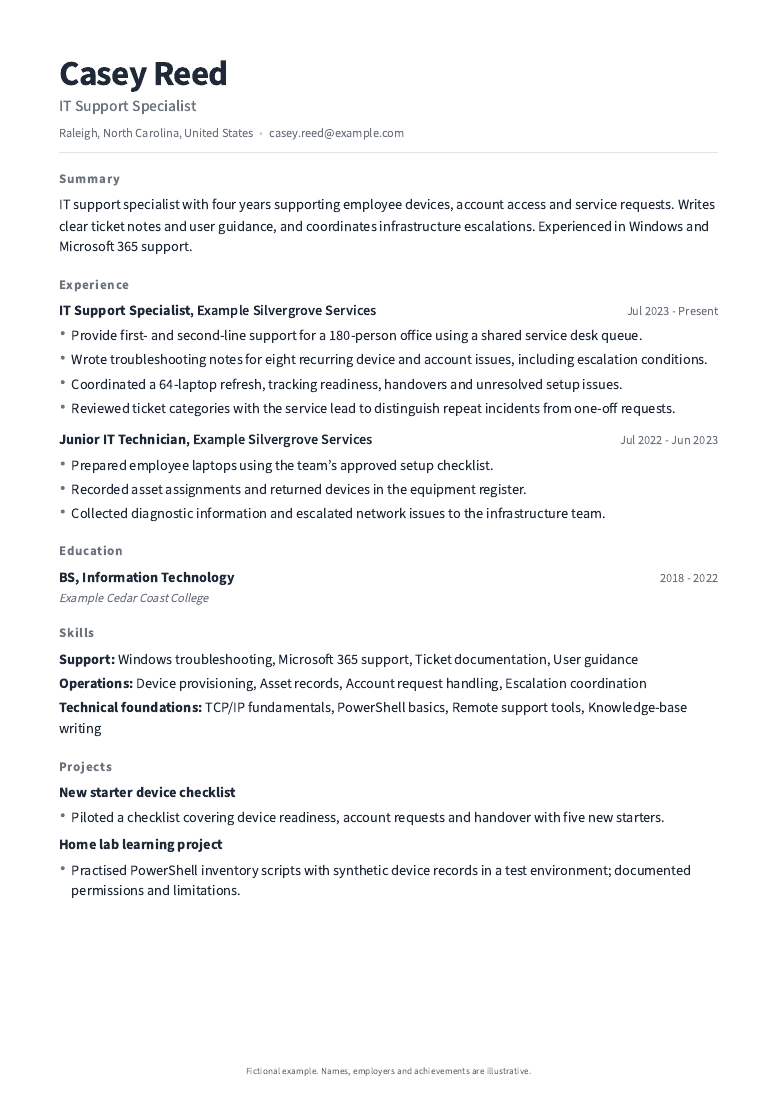
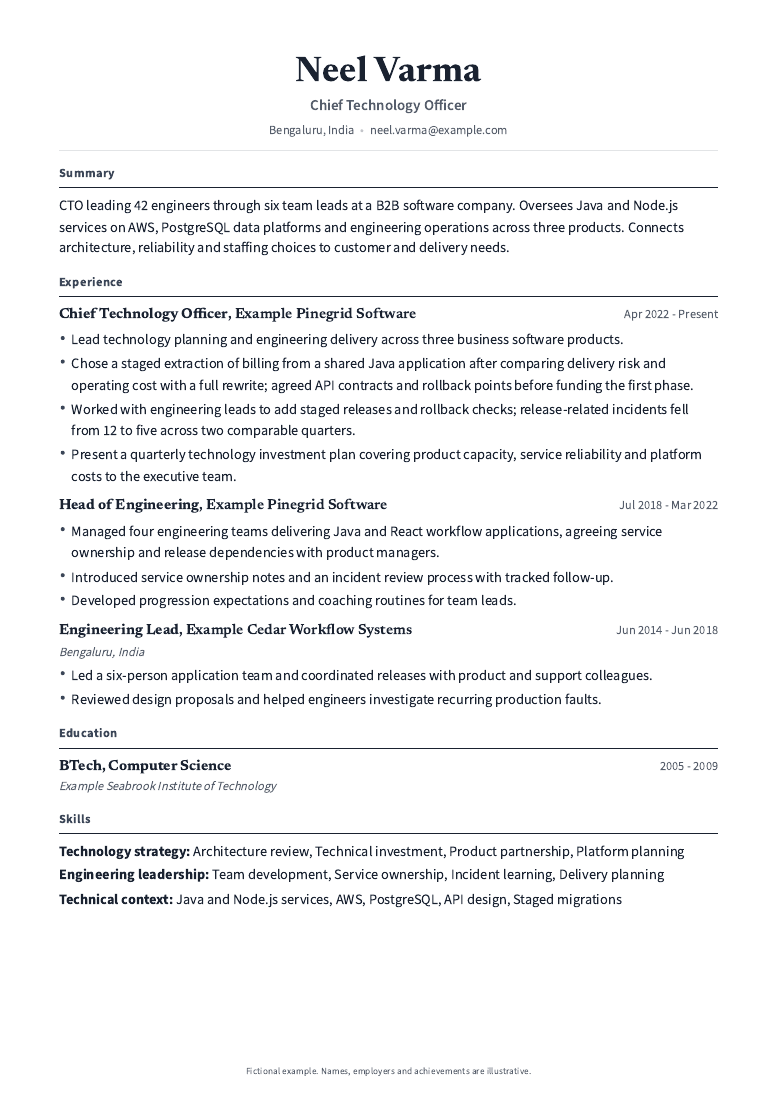
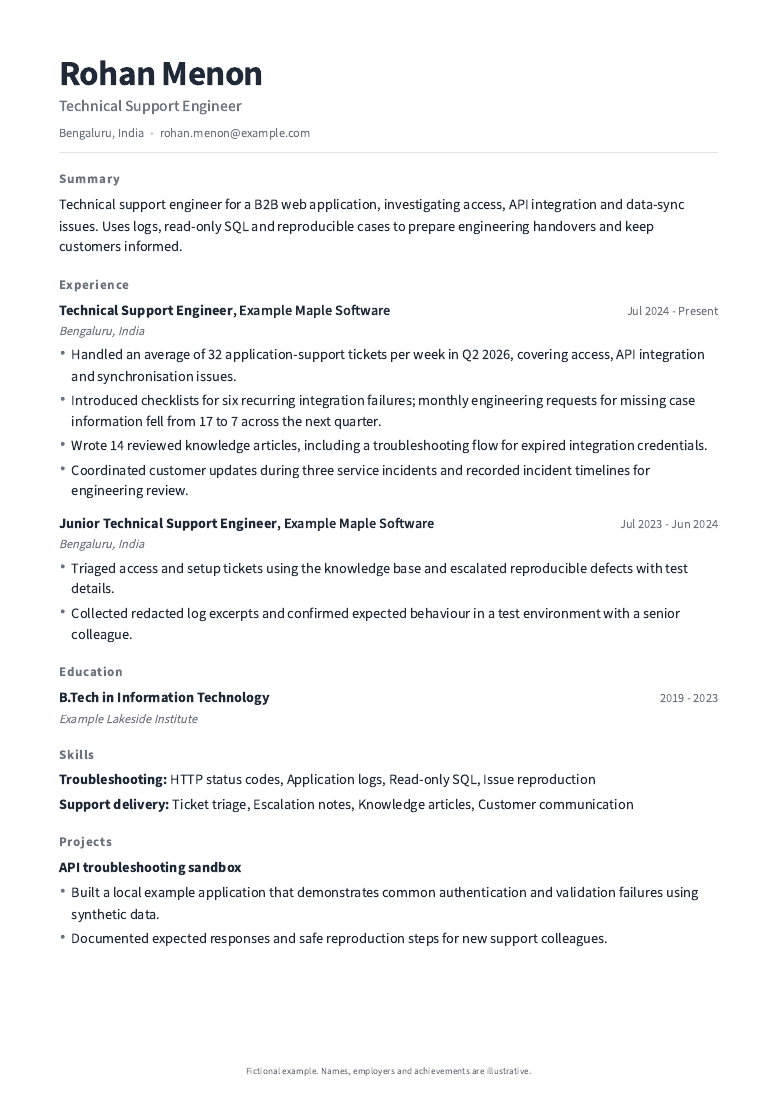
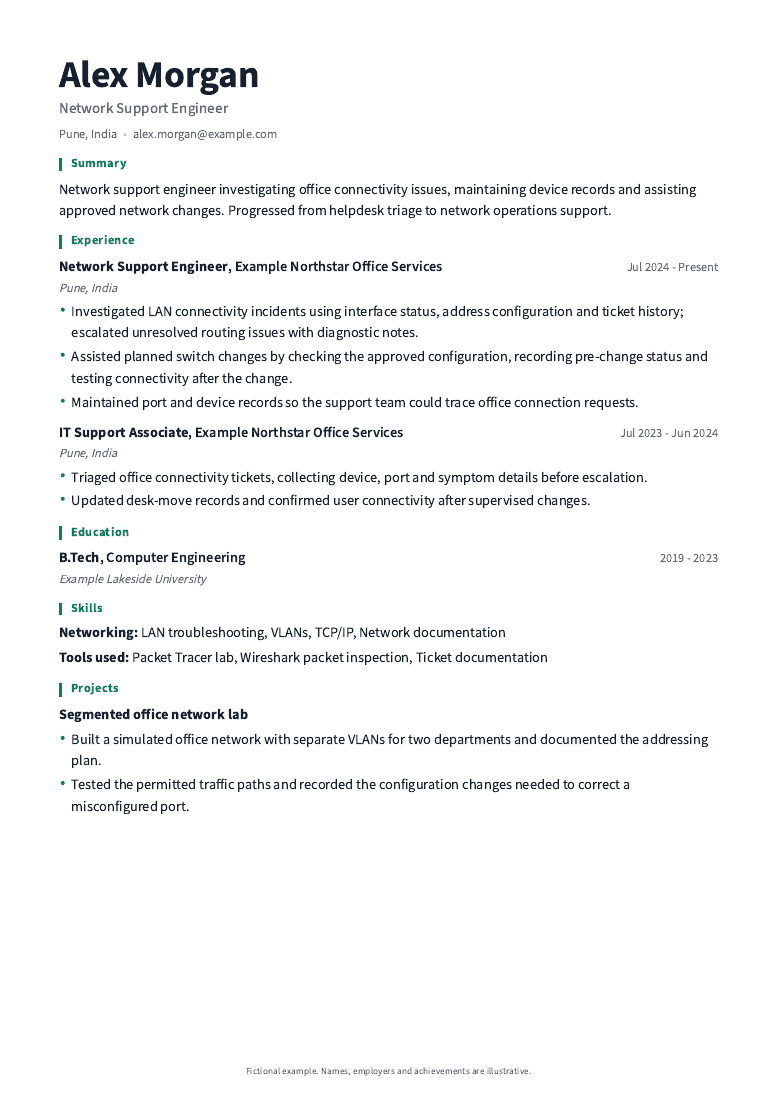
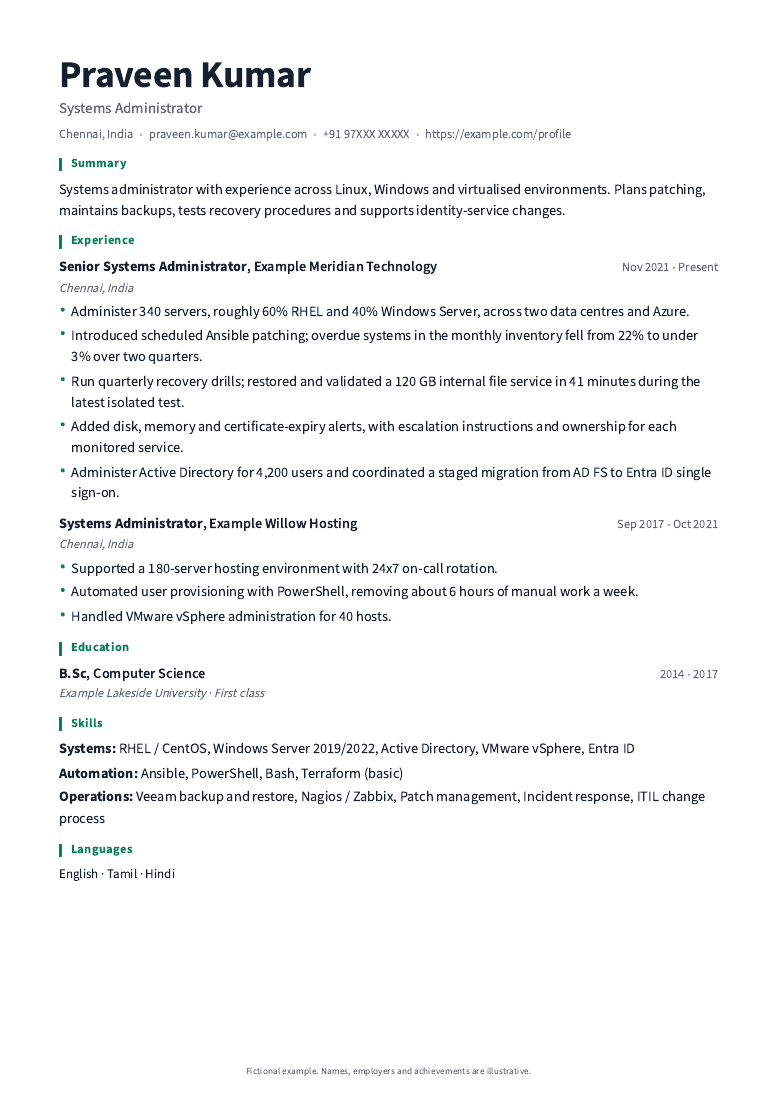
Service desk work, device provisioning and a laptop refresh fill the information technology sample. The network engineer sample shows connectivity diagnosis and a VLAN lab, and the systems administrator sample moves from a hosting role to patching, backups and identity services. Application support handovers appear in the technical support engineer sample, while the CTO sample covers engineering leadership and a staged migration.
5 samples, IT Support Specialist, Chief Technology Officer, Technical Support Engineer, Network Support Engineer, and 1 more. Each is a complete resume rendered as text on its own page, not a screenshot of one, and they run from mid-level to senior.
The information technology samples
- IT Support Specialist
Information Technology Resume Sample and Skills Guide
Information TechnologyMid-Level - Chief Technology Officer
CTO Resume Sample and Technology Leadership Guide
Information TechnologySenior - Technical Support Engineer
Technical Support Engineer Resume: Application Support
Information TechnologyMid-Level - Network Support Engineer
Network Engineer Resume Sample
Information TechnologyMid-Level - Systems Administrator
Systems Administrator Resume: Infrastructure Operations Sample
Information TechnologySenior
Skills that repeat across these information technology samples
These 1 terms appear on at least two of the 5 samples above. That is the whole claim: not what the field is supposed to want, but what these documents actually share.
- Ticket documentation ×2
What to leave off an Indian information technology resume
None of the 5 samples above carries a photograph, a date of birth, a marital status or a declaration line, and that is the single biggest difference between a resume written for an Indian employer in 2019 and one written for the shortlist today.
- The photograph, unless an employer explicitly asks for one.
- Date of birth, age, gender and marital status. None of them predict the work.
- Father's or husband's name, a form field, not a resume line.
- The full postal address. The city is what a recruiter filters on.
- Current and expected CTC. It is a negotiation, not a qualification.
- The declaration paragraph and the signature block at the end.
What replaces them is space: another two bullets of work that can be measured. The free review flags these on your own resume.
By experience level
Fields that hire for the same skills
Questions about information technology resumes
Is a CCNA enough for an early-career network engineer resume?
CCNA helps you pass the first filter, but it works best with proof of practice. Add a Packet Tracer or GNS3 lab with VLANs, routing and ACLs, and describe what you configured and tested. Include any campus or office network support you did under supervision. The network engineer sample shows a VLAN lab and connectivity diagnosis written at an early-career level.
How do I show ticket and SLA work on a technical support resume?
Give the ticket types, rough monthly volume and the SLA, taken from your tool's reports, for example 'resolved L1 and L2 application tickets in Jira Service Management within the agreed SLA'. Then show how you reproduced issues and what you passed to engineering: logs, steps and screenshots. The technical support engineer sample includes notes on ticket and escalation measures.
How should a systems administrator describe the size of the environment?
Readers want scale and stack. Say how many servers or virtual machines, which operating systems, such as Windows Server, RHEL or Ubuntu, the virtualisation platform, like VMware or Hyper-V, and identity services such as Active Directory. Add backup tools and how often restores were tested. The systems administrator sample moves from a smaller hosting role to a larger environment to show growth.
What should a CTO resume show that a senior engineer resume does not?
Business decisions and their trade-offs. Give team size and how you built it, technology choices with the reasons, the budget or cloud spend you owned, and outcomes for the company, such as a migration done in stages without long downtime. Reporting to a board or founders belongs here too. The CTO sample shows a staged migration, with notes on team scope.
Build your Career Story.
Build a Career Story from your experience, then use it to draft and review your application documents.