
Pharmaceuticals resume samples
Pharma employers in India read resumes in two ways. Plant and quality teams look for GMP knowledge, SOPs, batch manufacturing records, deviation and CAPA work, and the audits a site has faced, such as USFDA or WHO-GMP. Sales teams hiring medical representatives look for territory, doctor and chemist coverage, and product knowledge used within approved claims. Pharmacist roles need state pharmacy council registration.
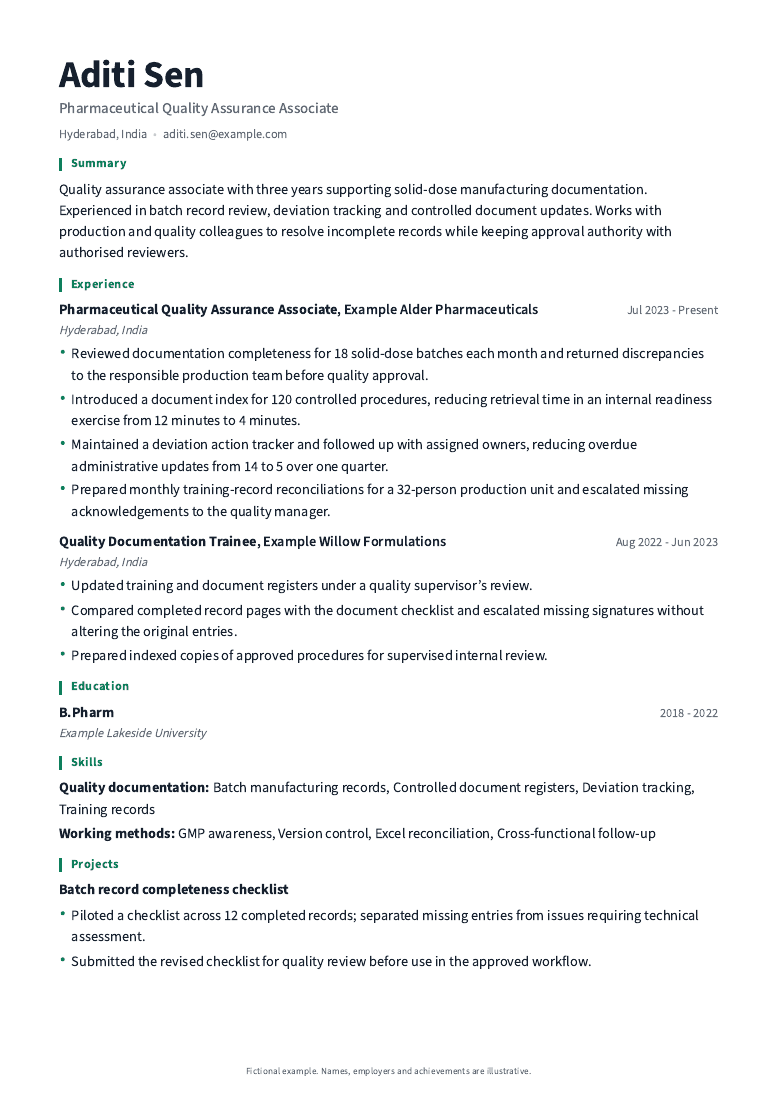
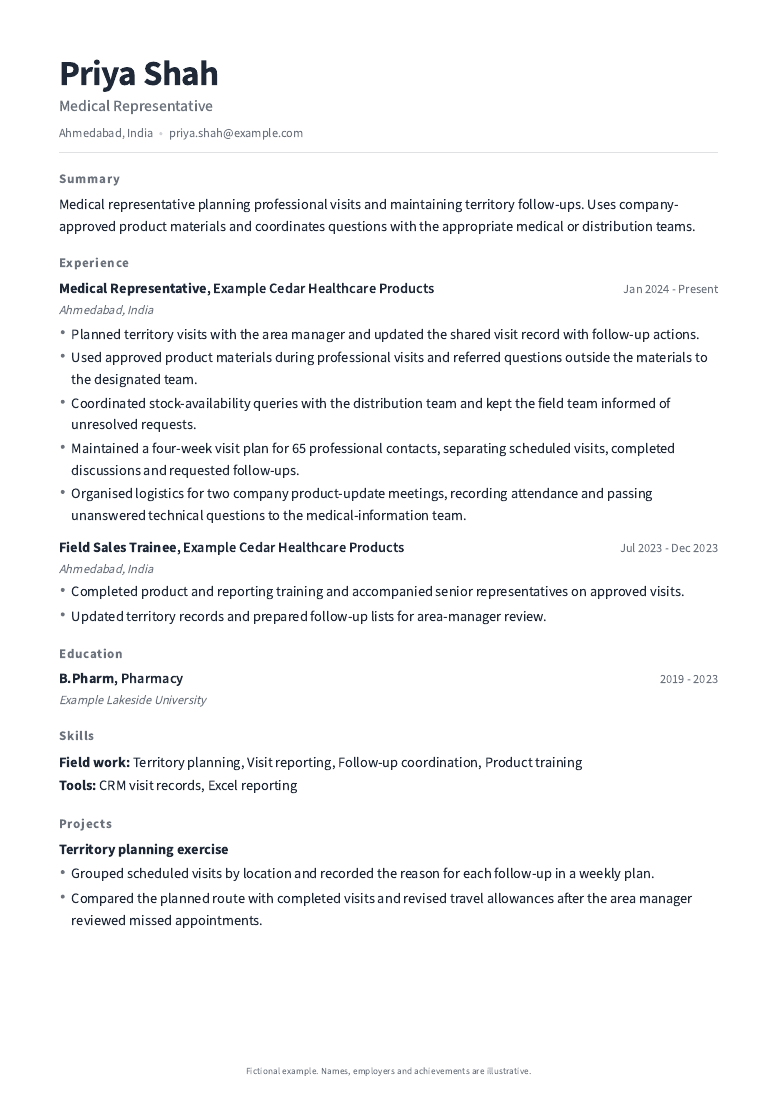
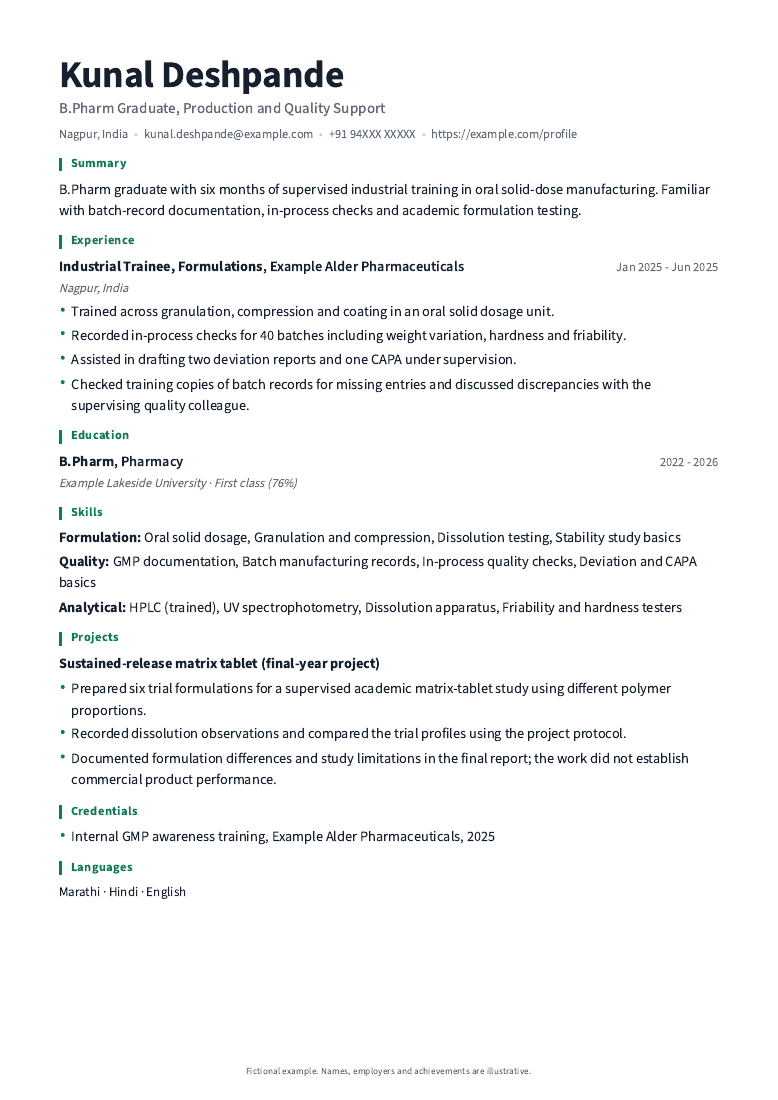
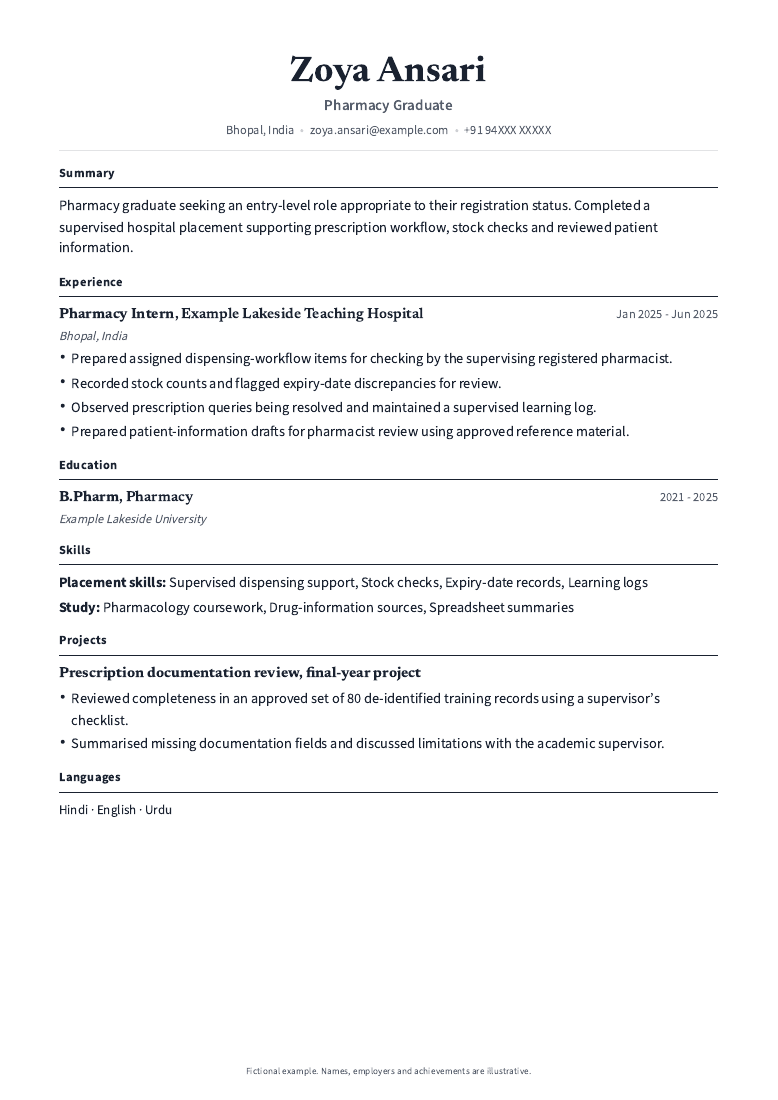
The B.Pharm fresher sample targets production or quality support with supervised industrial training. A placement, stock records and an academic project make up the fresher pharmacist sample. The pharmaceutical industry sample is a QA associate who prepares records but does not approve quality decisions, and the medical representative sample shows territory planning and follow-up.
4 samples, Pharmaceutical Quality Assurance Associate, Medical Representative, B.Pharm Graduate, Pharmacy Graduate. Each is a complete resume rendered as text on its own page, not a screenshot of one, and they run from fresher to mid-level.
The pharmaceuticals samples
- Pharmaceutical Quality Assurance Associate
Pharmaceutical Industry Resume Sample: QA
PharmaceuticalsMid-Level - Medical Representative
Medical Representative Resume: Sample and Writing Guide
PharmaceuticalsMid-Level - B.Pharm Graduate
B.Pharm Fresher Resume Sample and Format
PharmaceuticalsFresher - Pharmacy Graduate
Fresher Pharmacist Resume Sample and Format
PharmaceuticalsFresher
Skills that repeat across these pharmaceuticals samples
These 1 terms appear on at least two of the 4 samples above. That is the whole claim: not what the field is supposed to want, but what these documents actually share.
- Batch manufacturing records ×2
What to leave off an Indian pharmaceuticals resume
None of the 4 samples above carries a photograph, a date of birth, a marital status or a declaration line, and that is the single biggest difference between a resume written for an Indian employer in 2019 and one written for the shortlist today.
- The photograph, unless an employer explicitly asks for one.
- Date of birth, age, gender and marital status. None of them predict the work.
- Father's or husband's name, a form field, not a resume line.
- The full postal address. The city is what a recruiter filters on.
- Current and expected CTC. It is a negotiation, not a qualification.
- The declaration paragraph and the signature block at the end.
What replaces them is space: another two bullets of work that can be measured. The free review flags these on your own resume.
By experience level
Fields that hire for the same skills
Questions about pharmaceuticals resumes
Do I need pharmacy council registration on a pharmacist resume?
For a role where you dispense medicines, yes. Under the Pharmacy Act, 1948, you must be registered with your state pharmacy council to practise as a pharmacist. Put the council, registration number and status near the top. If registration is in process, say so plainly. The fresher pharmacist sample includes notes on registration and clinical responsibility.
How should a medical representative show territory performance?
Describe the territory first: the area, the number of doctors and chemists you covered, and the therapy area, such as cardiac or diabetes products. Then give results in the company's own terms, like call average, coverage or sales against target, with the period. Keep any product claims within approved information. The medical representative sample shows visits, follow-up and supported results.
How should a B.Pharm fresher describe industrial training?
Give the company, the plant type, such as oral solids or injectables, and the dates. Then name the departments you rotated through, like production, QC or QA, and what you observed or did under supervision: line clearance, in-process checks, reading BMRs. Do not claim release or approval work. The B.Pharm fresher sample uses supervised industrial training for a production or quality support role.
How should a pharma QA associate describe documentation work?
Name the records: BMR and BPR review, deviation logs, change controls, CAPA tracking and SOP updates. Say what you prepared or checked and who approved it, usually the QA head or an authorised person. Mention audit readiness work for USFDA, WHO-GMP or other inspections only if you took part. The pharmaceutical industry sample makes the line between preparing records and approving quality decisions explicit.
Build your Career Story.
Build a Career Story from your experience, then use it to draft and review your application documents.