
Supply Chain resume samples
Supply chain hiring in India looks for control of materials and money. Purchase roles are read for RFQs, comparative statements, purchase orders and vendor follow-up in SAP MM, Oracle or Tally. Stores roles are read for GRN, material issue, FIFO and cycle counts. Manager roles add S&OP, MRP, inventory days and service levels, with a clear note of who approved spending and stock write-offs.
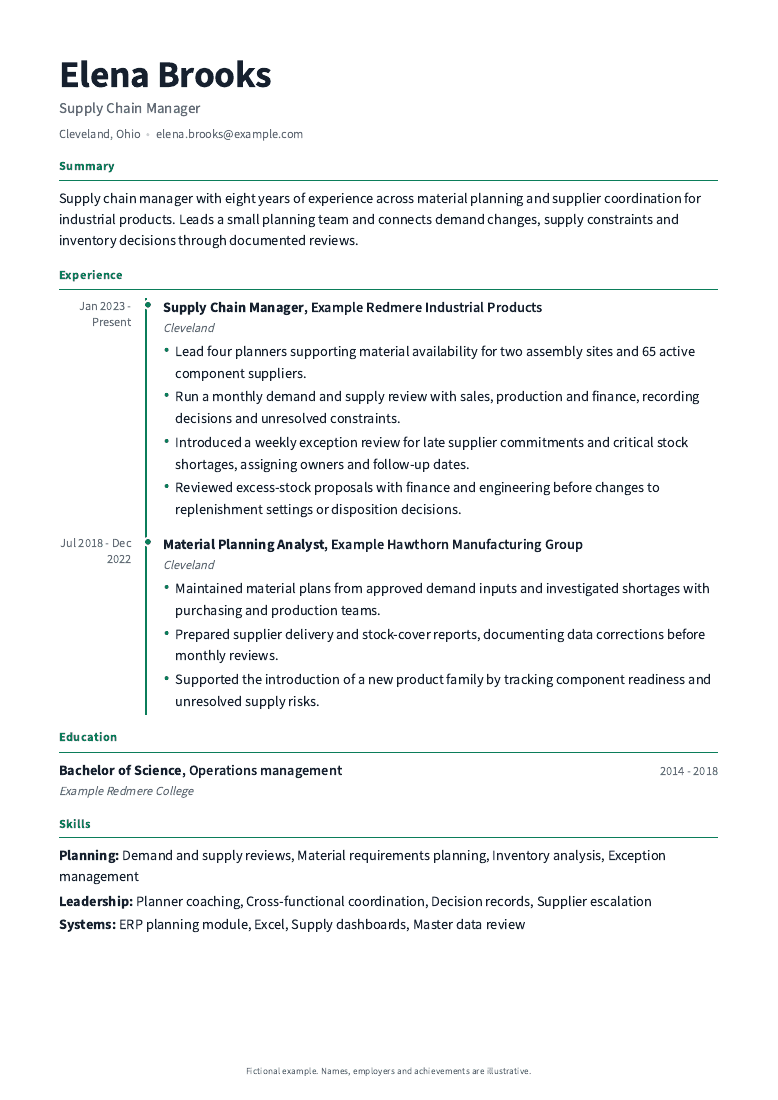
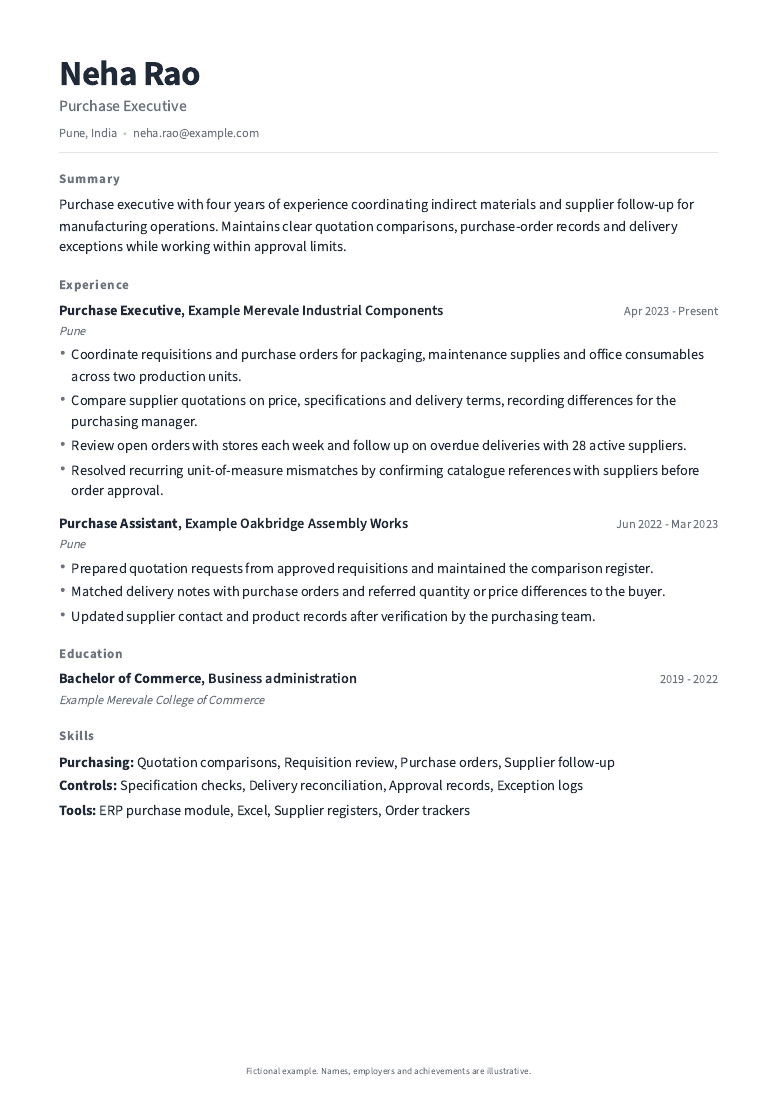
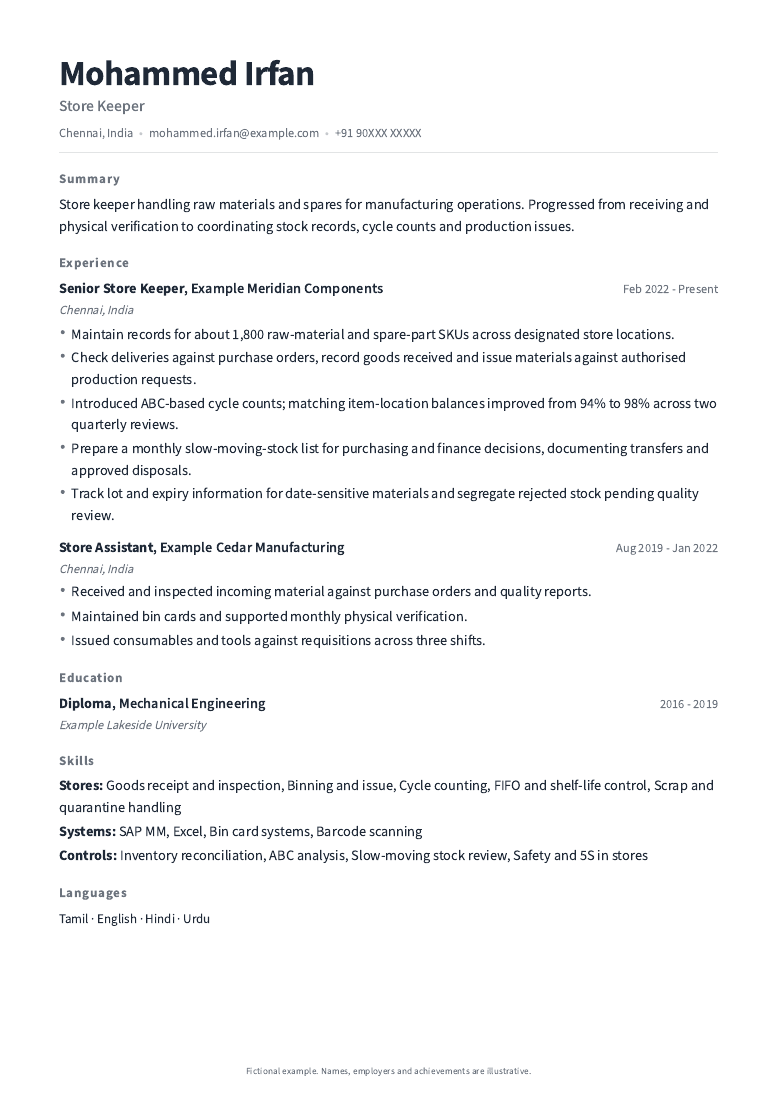
Quotation checks, order follow-up and a move up from assistant shape the purchase executive sample. The store keeper sample covers goods receipt, stock counts and material issue, with notes on approval limits. At the senior end, the supply chain manager sample leads a planning team and explains supplier constraints and the trade-off between holding inventory and meeting service levels.
3 samples, Supply Chain Manager, Purchase Executive, Store Keeper. Each is a complete resume rendered as text on its own page, not a screenshot of one, and they run from mid-level to senior.
Skills that repeat across these supply chain samples
These 1 terms appear on at least two of the 3 samples above. That is the whole claim: not what the field is supposed to want, but what these documents actually share.
- Excel ×3
What to leave off an Indian supply chain resume
None of the 3 samples above carries a photograph, a date of birth, a marital status or a declaration line, and that is the single biggest difference between a resume written for an Indian employer in 2019 and one written for the shortlist today.
- The photograph, unless an employer explicitly asks for one.
- Date of birth, age, gender and marital status. None of them predict the work.
- Father's or husband's name, a form field, not a resume line.
- The full postal address. The city is what a recruiter filters on.
- Current and expected CTC. It is a negotiation, not a qualification.
- The declaration paragraph and the signature block at the end.
What replaces them is space: another two bullets of work that can be measured. The free review flags these on your own resume.
By experience level
Fields that hire for the same skills
Questions about supply chain resumes
How should a store keeper show stock accuracy?
Use your count records. Say how often you ran cycle counts or full stock takes, how many items or SKUs the store held, and how you handled differences: recounts, reports to accounts, write-off requests. Name the system, such as SAP MM, Tally or a WMS, and the materials stored. The store keeper sample includes notes on inventory measures and approval limits.
How should a purchase executive describe cost savings?
Explain the comparison. A saving means little unless the reader knows the base: the last price paid, the budget, or the next-best quote. Write the item category, the base and the period. Separate savings that came from negotiation from savings that came from a change in specification. The purchase executive sample shows quotation checks and supplier comparisons, with notes on specifications.
Which certifications help a supply chain manager resume?
ASCM's CSCP or CPIM and the CIPS diploma are well known, and a Six Sigma Green Belt helps in roles close to operations. They help most when your experience already shows planning work: demand forecasts, S&OP meetings, MRP runs and inventory targets. The supply chain manager sample shows planning-team leadership and inventory trade-offs.
Build your Career Story.
Build a Career Story from your experience, then use it to draft and review your application documents.