Interview Request Messages: What to Say and Confirm
Write a polite interview request or reply to an invitation. Use fictional email and phone examples with clear role details, availability and next steps.
An interview message can mean two different things: a candidate asking to discuss an opening, or a reply to an employer's invitation. Make the purpose clear before choosing the wording. A candidate can express interest and ask about the next step, but should not write as though an interview has already been agreed. When an invitation arrives, the useful reply confirms the details and resolves any uncertainty.
Ask about an opening with context
Use the official application route first when the employer specifies one. If a recruiter has invited enquiries, identify the role and give one relevant fact about your experience. Keep the request modest and easy to answer. Do not send a generic message asking for any job to a long list of unrelated contacts.
Here is a fictional candidate message: Hello Ms Patel, I am interested in the Operations Associate opening, reference OA-104, and have submitted my application through your careers page. My recent placement involved maintaining order records and preparing a weekly exception report. If my experience fits the team's needs, I would welcome a conversation. Thank you for considering my application. Asha Rao.
The names, role reference and experience are illustrative. Do not say you submitted an application if you have not done so, and do not imply a personal referral that does not exist.
Keep a phone enquiry brief
If the employer accepts telephone enquiries, introduce yourself, name the role and ask whether it is a suitable time for a short question. A fictional opening is: Hello, my name is Asha Rao. I am calling about the Operations Associate vacancy listed on your careers page. Is this the right number for application enquiries?
If the person is not responsible for hiring, thank them and use the correct channel. Do not pressure a receptionist to connect you to a manager or repeatedly call after being asked to apply online. A polite enquiry can clarify the process; it does not create an entitlement to an interview.
Confirm an interview invitation
A useful reply confirms the role, date, time, time zone and meeting format. If one of those details is missing, ask for it directly. The following is a fictional response.
Hello Ms Patel,
Thank you for inviting me to interview for the Operations Associate role. I am pleased to confirm Tuesday, 22 September 2026, at 10:00 am India Standard Time by video call.
Please let me know if there is anything you would like me to prepare. I will use the meeting link included in your invitation.
Kind regards,
Asha Rao
Replace every detail with the actual invitation. Do not use the example date as a default. If the employer is in another country, check the time zone carefully and add the event to your calendar using the confirmed zone.
Request another time without overexplaining
Thank the sender, state that you cannot attend the proposed slot and offer a small number of realistic alternatives. For example: Thank you for the invitation. I am unavailable at the proposed time, but I can attend on Wednesday between 2:00 and 4:00 pm IST or Thursday between 10:00 am and noon IST. Would either window work for the team?
You do not need to share private personal details to explain a scheduling conflict. If the alternatives change, tell the contact promptly. Treat the revised time as confirmed only when the employer agrees.
Verify an unfamiliar invitation
Check that the role and application history make sense. Use the employer's official careers information to verify an unfamiliar sender or contact. Be cautious about requests for payments or sensitive documents through an unexpected channel. Do not disclose bank details or identity documents merely because a message uses a company logo.
If the invitation is genuine but vague, ask for the role title, meeting format and contact person. Clear logistics help you prepare and reduce avoidable confusion. Keep the message focused on the missing information rather than sending several separate replies.
Prepare after confirming
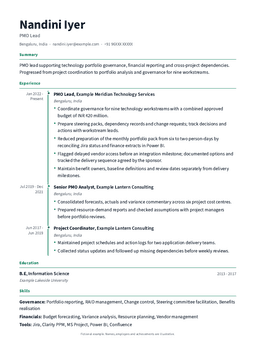
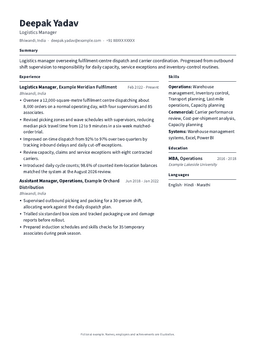
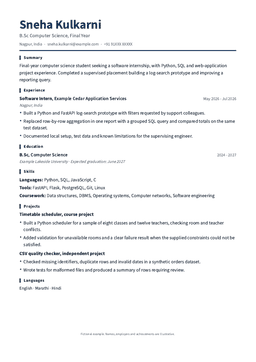
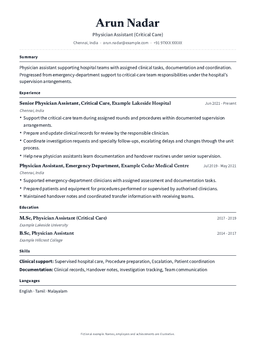
Re-read the vacancy and the resume version you submitted. Choose a few real examples you can explain, including your own contribution and the result. Use the resume section guide to check the consistency of your career story and review your resume if it needs a final pass. Keep the invitation, contact details and preparation notes together so you can find them before the meeting.
A good message is accurate, courteous and specific. It should leave both sides clear about the request or the agreed next step, without promising an outcome that has not been decided.