Telecaller Interview Questions and Sample Answers
Prepare for a telecaller interview with questions on opening a call, handling objections, callbacks, CRM notes and targets, plus tips for the mock call.
Telecaller interview questions focus on outbound calling: opening a call with someone who was not expecting it, handling objections, following up leads and recording every call accurately. Many telecaller interviews include a mock call, where the interviewer plays a customer and you try to book a demo, a visit or a sale. Your voice, clarity and listening matter as much as your answers.
Telecalling is different from inbound support. If the role is mainly about answering customer queries and complaints, the BPO interview questions and customer service interview questions are a closer fit.
Prepare for telecaller interview questions and the mock call
- Learn the product in two lines. What it is, who it is for and one reason a customer would want it. Use the company's website or the job advert.
- Plan your opening. Your name, the company, why you are calling and a question that invites the customer to talk, in ten to fifteen seconds.
- Ask before you pitch. Two or three questions about the customer's needs tell you which benefit to mention.
- Expect two objections. "I am busy" and "It is too expensive" come up often. Have a calm answer for each.
- Close with a clear next step. A demo time, a callback date or a visit. Repeat it back to the customer.
Interviewers also listen for language. Say honestly which languages you can use comfortably on a call, because it is easy to test in the interview.
Introduce yourself in a telecaller interview
Keep it under a minute: your qualification or current role, any calling, sales or customer-facing experience, and why the role suits you. Freshers can mention college events, part-time work in a shop or volunteering that involved talking to strangers. The self introduction guide has a one-minute template.
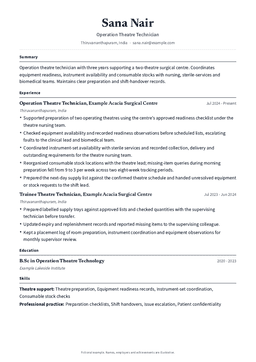
Show the same experience on your resume
Interviewers compare your answers with your resume. The telecaller resume sample shows how to describe call volumes, follow-ups and conversions with numbers you can explain.
Interview questions & answers
Calling
1.How would you open an outbound call?
Greet the person, give your name and company, and say why you are calling in one sentence. Check that it is a good time to talk. Then ask a short question before you pitch, for example whether they are still looking for a home loan if they made an enquiry. If it is not a good time, offer to call back when they choose and record it.
2.What would you do if the customer says they are busy?
Respect it. Ask for a better time, confirm the day and time, and end the call politely. Note the callback in the CRM and call exactly when you promised. Pushing on with the pitch usually ends the conversation for good, while a call at the agreed time starts with the customer's permission.
Objections
1.The customer says the price is too high. How do you respond?
Ask what they are comparing it with before you answer. If they are comparing with a cheaper option, explain what is included, using only claims the company has approved. If there is an approved offer or a lower plan, mention it. If the product is not right for them, accept that. Do not invent a discount to close the call.
2.Sell me this product over the phone.
This often tests whether you ask before you pitch. Start by asking how the interviewer uses a similar product now and what bothers them about it. Then link one feature to the need they mentioned and ask for a next step, such as a demo or an order. Good questions at the start show more skill than a long list of features.
3.How do you handle repeated rejection?
Treat a no as the answer to one call, not a judgement of you. Note why people decline and look for patterns, such as calling at a bad time or opening with the price. Take a short break after a difficult call. Give a real example if you have one, such as a part-time sales job where you kept going after a slow start.
Compliance
1.What do you do if someone asks you not to call again?
Apologise, confirm that you will not call again and end the call. Record the request in the CRM or the do-not-call list straight away, so no colleague calls them either. In India, unsolicited commercial calls are regulated by the Telecom Regulatory Authority of India (TRAI), and people can register their call preferences. Follow the company's process for these lists.
Product
1.What would you do if you cannot answer a customer's question?
Say you will check and call back, and give a time. Do not guess, especially about prices, terms, interest rates or eligibility. Ask your team leader or check the approved product material, then call back with the correct answer. A customer who gets an accurate answer later trusts you more than one who got a wrong answer quickly.
Records
1.What do you record after each call?
Record the outcome (interested, callback, not interested or wrong number), the next step and its date, and anything the next call needs, such as the customer's preferred time or budget. Write it straight after the call while you remember it. Accurate notes let a colleague continue the conversation if you are on leave, and they keep your reports correct.
Follow-up
1.How do you follow up a lead who asked for a callback?
Call at the agreed time, mention the earlier conversation and continue from where it ended. If they do not answer, try again at another time as the company's process allows, and send a message if that is permitted. Stop after the agreed number of attempts and mark the lead clearly. Prompt follow-up is often where an interested lead turns into a sale.
Targets
1.How many calls can you make in a day?
If you have done this work, give an honest figure with the talk time behind it, for example 120 to 150 dials with about three hours of talk time. If you are a fresher, say you will learn the team's normal range and aim to reach it in your first weeks. Add that you track conversions as well as calls, because many short calls with no outcome do not help the target.
2.Are you comfortable working with targets and incentives?
Say yes only if it is true, and show that you understand how targets work. An experienced candidate might say: "Yes. In my last role I had a monthly target of 40 site visits, and I tracked my calls and visits against it every day so I knew early if I was behind." Ask how targets are set for new joiners and how incentives are calculated.
Role fit
1.What would you ask before joining?
Ask where the leads come from (enquiries, existing customers or bought lists), the daily call and conversion expectations, the product training and how incentives are paid. Ask about shift timings and whether the role includes field visits. The answers tell you whether the targets are realistic and how much support you will get in the first month.
Practise the mock call with a friend playing the customer, and record two or three of these answers to hear how you sound. You can paste an answer into the free interview answer grader to check that it gives a clear example. Before you apply, run a free resume review to see whether your calling experience is clear on your resume.
Check your own material with the Free interview answer grader.