Interview Preparation: Introductions, Examples and Practice
Prepare a clear introduction, truthful work examples and questions for the employer. Includes fictional answers and a practical interview checklist.
Start with the vacancy and the interview invitation. Identify the work you would do, the evidence the employer requests and the format of the meeting. A technical exercise, a structured panel and an initial recruiter conversation need different preparation. No question list can predict the whole interview.
Prepare a short introduction
Introduce your current experience, one relevant example and the reason this role interests you. Practise a concise version you can expand when asked. A minute is a useful rehearsal target, not a rule you must follow regardless of the question.
Fictional example: “I am an operations analyst at Example Dispatch, where I maintain delivery-exception reports and coordinate follow-up with depot teams. Before that, I worked in customer support, which helped me understand how incomplete tracking information affects customers. I am interested in this role because it combines operational reporting with investigating recurring service problems.”
This introduction names work and a reason for applying. It does not recite every job or make an unsupported performance claim. Replace the employer, responsibilities and motivation with your own facts.
Build a small set of evidence stories
Choose real examples covering a result, a mistake, a disagreement, a difficult deadline and something you learned. These are useful practice areas, not a complete prediction of interview questions. Use employment, study or volunteering as appropriate and label the setting accurately.
For each example, note the situation, your responsibility, your actions and the result. This is the STAR structure. Spend enough time on your actions for the interviewer to understand your contribution. Acknowledge colleagues’ work rather than turning a team result into an individual claim.
Fictional example: “Our student society’s event expense tracker did not match the receipts. I was responsible for preparing the committee summary. I compared each receipt with the tracker, separated duplicates from missing entries and asked the treasurer to review unresolved items. We corrected the summary before the meeting and added a receipt-reference field for the next event.”
The result need not be a dramatic percentage. A completed correction, a clearer process or a documented limitation can be useful evidence. Do not invent a failure or add a metric you cannot explain.
Practise the work the role requires
Use the vacancy to choose functional topics. An accounts role may require reconciliation examples; an engineering role may include debugging or design; a teaching role may ask about lesson planning and learner support. Ask the recruiter about the format when the invitation is unclear.
For a practice problem, explain assumptions, work through the steps and check the result. If information is missing, say what you need and how it would affect your decision. Follow the employer’s rules about external help, tools and confidential material.
Prepare questions that affect your decision
Ask about responsibilities, team support, priorities and how performance will be assessed. For example: “What would you want the person in this role to achieve in the first three months?” or “How are urgent requests prioritised when several teams need help?”
Compensation, working hours, location and leave can be legitimate questions when they affect whether the role is workable. Ask the appropriate contact at a suitable stage. There is no universal rule that candidates must avoid these subjects in a first conversation.
If your questions have already been answered, say so and confirm the next step. You do not need to invent a question merely to fill the time.
Check the practical details
Confirm the date, time zone, format, location or meeting link and any requested materials. For a video interview, test the microphone and connection and keep the contact details available in case the call fails. For an in-person interview, check travel and any stated arrival or identification requirements.
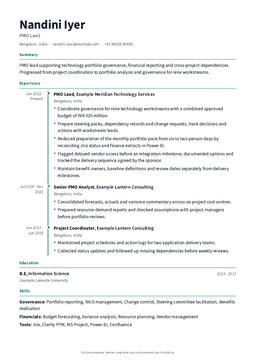
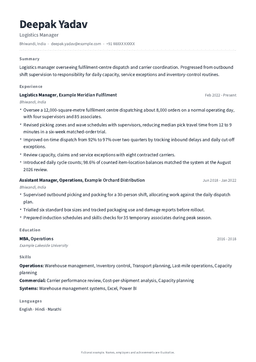
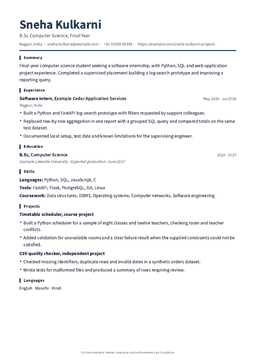
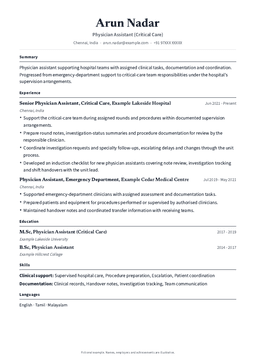
Keep your submitted resume and the vacancy accessible. Review dates, tools and achievements so that you can explain the version the interviewer has. Do not share confidential work samples or personal information unrelated to the application.
Review the conversation afterwards
Note the topics discussed, any information you promised to send and the expected next step. A short thank-you message can acknowledge the conversation when you have a suitable contact. Send requested material accurately and on time.
If the stated response date passes, a polite follow-up is reasonable. If no date was given, choose a sensible interval and avoid repeated messages. Use feedback when available, but do not infer a rejection reason from silence alone.